Showing posts with label Oman. Show all posts

Thursday, 6 October 2016

Road trip: The Roses of Jebel Akhdar


After several failed attempts to explore Jebel Akhdar, I finally made it up there to see the roses in bloom back in April.

Jebel Akhdar (translation, the Green Mountain), is part of the Al Hajar Mountain range. It takes about an hour and a half to drive to from Muscat, or less depending if you have a driver who likes to put his foot down. At its peak, the mountain is 3,000 metres high, and you don't appreciate just how high this is until you arrive at the base and get your first glimpse at the steep the road to the top.

The mountains are the perfect place to escape to in the summer since it is significantly cooler up there. The temperature was 30 degrees at the base and 20 degrees at the top.

It is called the Green Mountain because at the higher altitudes there is precipitation, which means the land is moist enough to allow the growth of shrubs and trees and support agriculture, which includes pomegranates, apricots, peaches, and walnuts. This time, we were here for the roses. The roses are used to make the famous Omani rosewater, which we were told was the most sought-after rose water in the region. It is added to drinks and food, typically Omani halwa and coffee, and it is also thought to be good for the heart, arthritis, and headaches if you rub it in the relevant areas.

We visited the rose gardens and distiller with Guide Oman. They have a great relationship with a few Omani heritage workers, Abdullah being one of them. Abdullah is one of five Omani's left making rose water the traditional way. According to him, he had been making water since the day his eyes had opened. He wakes up early in the morning when its cool (and before the petals get a chance to bloom fully and lose their aroma) and picks the flowers. It takes 7.5kg of roses to make a Vimto sized bottle of rose water, which is a lot of roses.

The whole flower is then put into an earthenware pot with water, sealed up, and a wood fire lit underneath and left to boil for a couple of hours. The rose-flavoured steam then condenses into a metal container that is inside the pot, and it is then filtered to get rid of the oily residue. This produces a dark and very smoky-smelling rose water, which is nothing like the rose water that I expect everyone has seen and smelt before. The 'traditional', clear rose water is produced by boiling the flowers rather than the wood burner technique.


After seeing the distillery, we walked along to Seeq Village, part of Saiq Plateau. There we got to see the Damascus rose bushes as well as pomegranates, onions, garlic, walnuts, figs and other plants I didn't recognise, and lots of toads.

We then had a very tasty lunch at the Sahab Hotel, which has spectacular views from the gardens of the terraces.

The roses season is over for this year so if you do want to see them mark April on your calendar as the best time. Guide Oman are mostly known for their desert crossing trips, but they do offer unique experiences like these and the relationships they have mean that you do get access to places and people that you might not otherwise see just making the journey there yourself. We paid 45 OMR for the day (which included lunch and drinks). Details of this and the other tours they offer can be found on their website.


Friday, 30 September 2016

Al-Hoota Cave


I've been feeling this push to tick off as many Oman attractions as physically possible before the baby arrives. Al-Hoota Cave was something I read about before I even moved to Oman, but until about two weeks ago it had been closed.

Now there are two sides to the cave experience, being inside the cave and waiting to get inside. I'll start with the former.

The cave is estimated to be over 2 million years old, and while it has a total length of 4.5 km, about 0.5 km is accessible via a guided tour. Inside are epic rock formations created by water. You enter the cave via an electric train in groups of around 75 and walk along stairs and ramps to explore the various parts. The pace of the tour is a comfortable one, which is great considering it is very hot and humid inside. The guides stop at various points and tell you a bit about the history of the cave, how it was formed, animals living inside etc, and it takes around 45 minutes to do the full circuit.

The cave has been closed for the last four years, but once you step inside you can see the effort that has gone into making it suitable for visitors; there are sturdy paths and steps and good lighting (although there doesn't seem to be disabled access). The cave is mostly rocky, but towards the end of the tour there is a lake, which contains some blind fish and provides a much-needed breeze before you make your way to the exit and take the train back to the main entrance. Unfortunately, I wasn't able to fill this post with pretty pictures of the inside of the cave because you aren't allowed to take any, but it is definitely worth a visit, and in theory you could combine it with a trip up to Jebel Shams, as the cave is found at the base of the mountain. It's also worth mentioning that there is a very interesting museum that you can also visit, which has a bit more information about the cave and the general geology of Oman, and there is a place to get food and drinks.

The reason say "in theory" you could combine a trip to the cave with another activity is that getting inside is quite another thing. The cave does have a fancy new website to go with it, and there you can book tickets for a particular time slot, and find out more information about the cave. It certainly gives off a very professional vibe, and you would expect a very organised, smooth operation when you get there.


The first problem starts in the car park. Considering the cave can take 750 visitors a day, there isn't enough parking to accommodate everyone, and if you are unlucky you'll have to park a fair walk away. It's the same with the waiting area inside, and there is general chaos as everyone pushes and bundles together to either sort out their tickets or get on the train. Unfortunately, the people in charge don't do a good job of letting people know there is a system (you get assigned a group number when you collect your tickets) and it means that people just start pushing and generally being disorderly. We did book ahead and had a 12.45 time slot, but this seems mostly arbitrary, and we didn't get in until around 2.30. Interestingly on that day they had been taking bookings between 1 and 2pm, even though we were told there was a "break" at that time. I'm not sure if that break happens every day, but it's worth noting. Your best bet would be to arrive first thing in the morning, and make sure to book tickets as I've heard you can get turned away otherwise.

I don't know if we got particularly unlucky with the day we went (Eid holidays, a few days after opening) but, I hope, the running issues get sorted out quickly and the cave can be the nice addition to the Oman attraction scene that it should be.

Check out Al-Hoota Cave website, here, for more information and to book tickets. 

Wednesday, 3 February 2016

Diving in Oman

I will begin with a disclaimer; I still consider myself a new diver. That basically means that there are times where I find myself still flapping about rather than looking like the graceful mer-like people you see in any diving video. I am okay with admitting this because diving is a constant learning process and I really can't expect to be at dive 20 where someone on their hundredth-plus dive is.

For wiser words and thoughts on diving, I would read Captain Blue Finger's blog. He was a diving instructor here in Oman and is a fantastically witty writer.

My aim is just to get anyone thinking about diving that push to book a discovery session or even a course. Since getting certified last summer, a lot of my weekends have been spent diving, or planning when I will next dive. Hence, the lack of adventures and posts on this blog.

In my limited experience, I would say that Oman is a great place to learn and dive. The waters are relatively calm, so travelling to the dive site is bearable for anyone who is easily nauseated, like me. I also haven't experienced any strong currents here. Maybe that is just luck on my part, but having done drift dives in Bali, and clinging to a rock in the Maldives, I am aware of that feeling of not being totally in control. As a beginner, calm water does make it easier for you, although later on you may yearn for the easiness of having the sea carry you along while you admire the view.

Now, the diving schools. I have tried most of the ones located around The Wave (or Al Mouj as it is now called). I won't go into too much of a review with them, but I would say they run the operations similarly. You don't get any luxury treatment like you do in Asia, with people setting up your equipment for you while you snack on wafers and drink juice, but some are more organised with getting you your equipment than others. And some offer much newer and well-maintained kit.

I did my training with Omanta with a female instructor called Faye. She was fantastic, really calm and patient, completely understanding of how weird it is to do scuba for the first time, and keen to get you to be a good diver with good habits. I was fortunate to learn one-on-one, which I am not sure standard practice, but was great because you get all the attention. Unfortunately, Faye has now left Oman so I would suggest that whatever dive school you go with you meet whoever is going to teach you and make sure you get along. Like anything, if you are comfortable around someone you will be more responsive to the learning.

I blogged about the theory side of the learning; understanding the physics underwater, how it affects you, and the dangers. The practical is spent putting skills into practice, what happens if you lose your mouthpiece, run out of air, lose your mask, that sort of thing. You also learn things you will be expected to do every dive, such as figure out how much additional weight you will need and how to clear your mask if water leaks in.

Without wittering on too much in this post, I'll leave you with a round-up of my favourite diving pictures and a video starring yours truly.


Sunday, 30 August 2015

Expat life: Money matters when living in Oman


As promised, my latest expat life post will try to break down the cost of living in Oman. According to the 2014 Mercer Cost of Living Survey, Muscat is one of the least expensive destinations in the world; it was ranked 168 out of 211 cities polled. However, the ranking was 179 out of 2014 in 2012, and 184 in 2011, so the cost of living has been increasing.

Most expats are lured by generous packages that offer good salaries, accommodation, maybe even a car and bonuses, flights home, and medical insurance. So these key things seem the most logical thing to start with.

It is also worth me beginning my saying that I am coming from the angle of a qualified, Western expat. There are many low productivity expat jobs – maids, gardeners, builders - typically filled by Asian labourers and their motivations and, ultimately, their lifestyle in Oman is completely different.

Salary
The big industries that pull people to Oman are oil and gas and construction. Expats tend to work in senior positions in these fields or in sectors where there are skill shortages, such as in the healthcare and education fields. It is worth noting that there is relative job insecurity at the moment; Omanisation is the key word, and most companies have quotas to meet in terms of hiring locals. As always, I have no intentions to comment on the way things are done here, it is how it is, but it does mean that some are on fixed contracts with no idea towards the end if they will be renewed. I also want to add that for industries like mine that don't seem to be established here the pay is extremely poor. I would expect that, even after tax, in the UK I would be taking home close to double what I make now.


Accommodation
Rent in Oman is paid annually and in advance, rather than monthly. This is a huge lump sum. Unlike London, rent isn't more than half of your monthly salary so while you might find yourself a little pressed when it is rent time, you can feel quite flush for the rest of the year. There is a budget and style range to accommodate all. Costs vary according to size, facilities, and area and places are usually unfurnished. Most people make a pilgrimage to Ikea in Dubai for furniture since what is available here is limited and expensive. You can buy furniture second-hand from expats leaving, and there are Facebook groups for this (here) and another website called DuBizzle.

Utilities, such as water, gas and electricity, aren't included in the rent, but these are subsidised to some extent by the governments, which own the services. Utilities are therefore cheaper than in most European countries. Obviously in the summer you can expect the AC bill/electricity bill to increase significantly.

When it comes to the internet, there are only two companies to choose from: Ooreedo and Omantel. We currently have a cable line with Omantel, which is the only provider in our area. We are lucky that our connection is ok, but in some places it drops out frequently. Different parts of town have different connection speeds and strengths. Our current monthly fee is 35OMR per month, and that is meant to be for the fastest connection. It is worth noting that things like Viber and Skype are blocked, but there are ways to get around this and other services you can use. On my iPad, I used an app called ZenMate to provide a VPN as if I am in the UK so I can watch BBC IPlayer.

For my mobile phone I bought a SIM card that I top up occasionally; I subscribe to a 1GB data package for 5OMR a month and have 2-3OMR on there for calls, which I use very infrequently. I have called the UK on my mobile before (Ooreedo) and I was surprised how little it cost. I spoke for a good half hour with only 2OMR credit, but it's obviously not a habit you would want to take up frequently.


Transport
The cost of using a car in Oman is much cheaper than Europe, almost everyone drives. Petrol is very cheap; it is subsidised. At the moment, it is 0.12OMR/litre, (that's about 20p/litre).  Vehicle registration and insurance are based on the car rather than the driver so once the car is insured anyone with a licence can drive it. Insurance for a 4x4 for multiple drivers is around 360OMR a year. A lot of people seem to buy new, on credit, but there are second-hand cars to be had, usually from expats who are moving on. There is also the option to rent a car long-term. I used to rent a small car for 200OMR/month.

Public transport is pretty much non-existent, there are buses, apparently, but I have never seen one and they are usually meant for the lowest paid workers. So unless you are after a raw, local experience, I'm not sure you would ever want to use one. There are also coaches for longer journeys to Sohar, Dubai, and Abu Dhabi. Locally, you can get around by taxi but these don't run on a meter so how much you spend will depend on what you look like and it's a matter of haggling.


Food and drink
The cost of food surprised me the most, although it probably shouldn't have. Since a lot of products are imported, they work out more expensive. Local products are cheap, although the fruit and vegetables aren't that tasty. Lulu is the best value supermarket, and Al Fair/Spinney's is the most expensive -- but has the highest quality -- and Carrefour is mid-range. A weekly shop for two people costs me 30-40OMR, that's buying the typical fruit, veg, meat, water. It can bump up to 50OMR+ if I add in household cleaning things and cosmetics.

As a non-drinker, I can't comment on alcohol so much, but I understand the buying and consuming for home-use is complicated and costly. There are some restaurants with licences, mostly in hotels, and there are bars too.

Eating out can also be costly, especially considering the quality. A three-course meal at an average restaurant costs around 20OMR for two.

I'm also going to slot a little about buying clothes and makeup/skincare here, there isn't a huge choice of brands and what is available is at a premium. M&S I have noticed has old stock, a dress I picked up in the clearance in the UK for £18 was being sold here for 60OMR. For makeup, I've noticed that the amount in pounds is nearly always the same as rials, so that £10 foundation at home now works out at £16. You also don't find the 3 for 2 deals or many gift with purchase offers to soften the blow.


Entertainment
Tourist activities seem to be very overpriced, which is a shame because I would much rather go as part of a group or tour where someone else knows where they are going and what stuff is. For example, a trip to Jebel Akhdar for four people is 150OMR, but it would cost you probably 15OMR to fill your tank and drive yourself.

But, if you like lounging on the beach, it's free! Boat trips such as snorkelling, cruises, and dolphin watching are roughly 15 to 25OMR. The boats are well maintained and the crew knowledgeable, which is always comforting. They will usually provide lunch and drinks too.

Other entertainment is not costly. Cinema tickets are 3OMR and the food is also cheap. I am not sure what the standard is around the world, but in the UK buying a drink and some popcorn was usually more expensive than the tickets and going to the cinema was a treat. They don't do traditional sweet popcorn though, I don't know why.

The Royal Opera House usually has a range of ticket prices for their shows, if you are happy to sit at the top, which actually has great views you can see a show for as little as 5OMR. The most expensive seats are up to around 50OMR.

At home, we have a TV sports subscription, which costs 100OMR for the year.

The cost of gym membership depends on the gym, you can get some for 10-15OMR a month. I have just signed up to the gym at The Wave, The Wellness Centre, and it worked out to 30OMR a month, but I had to pay for a year in advance for that rate.

Healthcare
Most companies offer health insurance to the family as part of the employment package, you just need to look out for the exclusions, dentistry and mental health, for example. Policies won't necessary cover you for the government hospitals either, which I have heard have better standards. Your policy will dictate what you pay for and how much, most recently when I went to see a GP the full cost of that visit was covered, but when I needed a blood test to determine my blood group I had to pay.  Buying drugs from the pharmacy seems to be cheaper than the UK and worryingly there are a lot of drugs you can buy without a prescription.

Schooling
I don't have children so this isn't something I know much about. Some companies do pay for schooling as part of the employment package, but if they don't then I have heard it is a huge expense. There is no free education for expats in Oman.

Right, I think that's it. If I've missed anything feel free to add information in the comments section. 

Tuesday, 28 April 2015

Camping: 1000 Nights Camp revisited

It seems appropriate that with Earth Day just passed to share some beautiful pictures of Oman's landscape.

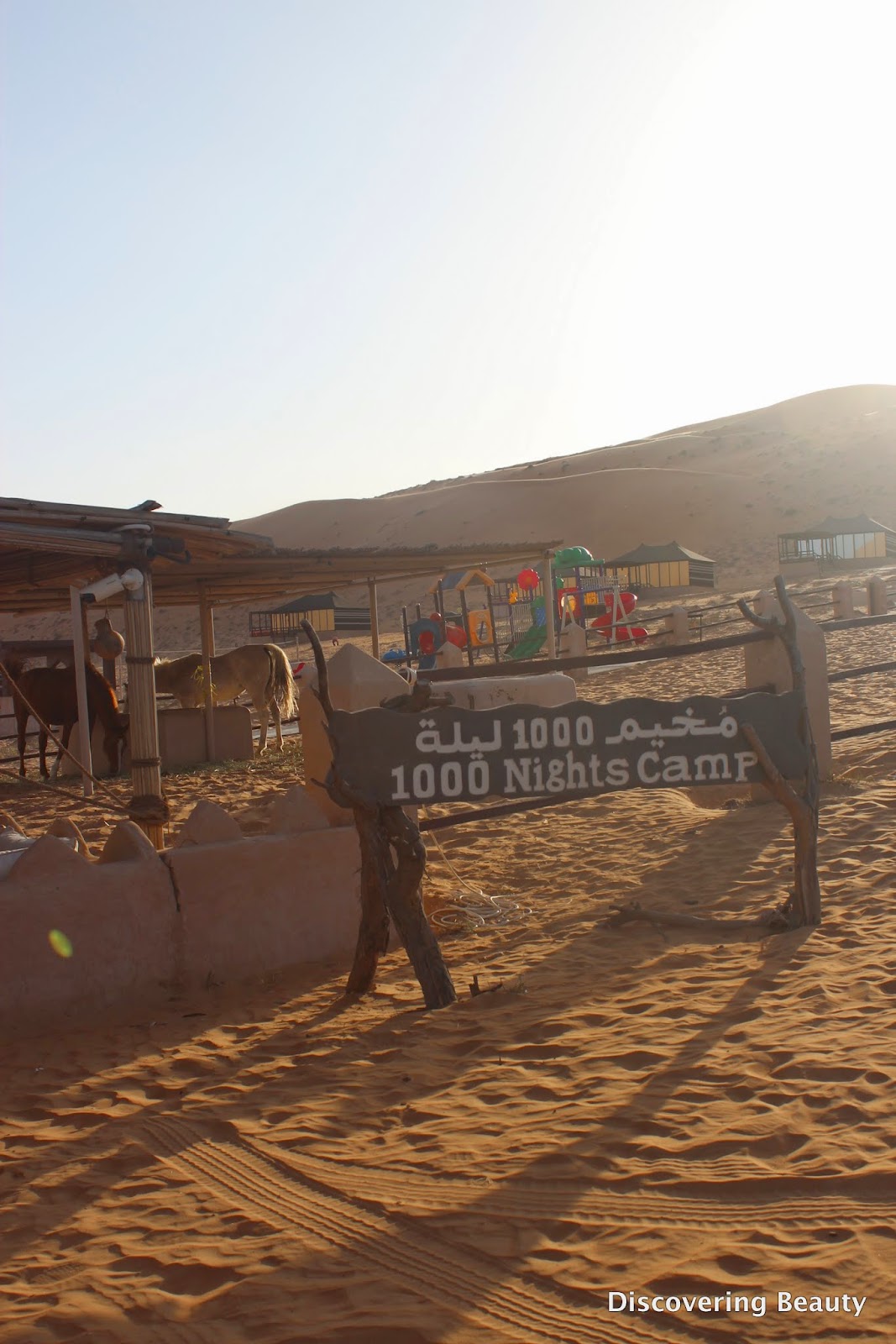
Last weekend we revisited the 1000 Nights Camp in Wahiba Sands, and while I won't go into detail about the camp again (you can read about it, here) I will say that it was a completely different experience this time. We knew how to get to the camp for starters.

On this occasion, we had my aunt, mum, and cousin with us. Before entering the sands, we stopped in what I can only call an oasis for lunch. Right next to the sands, an area filled with green plants and trees. Beautiful. I wish I had the photography skills to get a shot showing the contrast, but just picture sand dunes next to farmland.

After the 40km drive, we arrived at the camp and managed to get a drive up to the top of the dunes to watch the sunset. Our driver gave us a taste of dune bashing, which was terrifying. As you go over the top of a dune, you get that feeling that you do at the peak of a roller coaster, except you are very aware of the fact that there is no suspension to slow you as you fall and you are completely reliant on the skills of the driver.

Having safely arrived at the top of the dunes, we sat and waited for the sunset.


Being April, it was much hotter than last time and we were wrong this time to have got a room without air conditioning, the temperature stays hot throughout the night before dropping very slightly in the early hours of the morning and then heating up all over again. This time the water in the bathroom was warm though, which made having a shower outdoors much more bearable.

The next day we headed along to Wadi Bani Khalid, again. This is still my favourite place in Oman, and while I wouldn't recommend a trip to the desert right now, Wadi Bani Khalid would be a perfect day trip because the pools of water are perfect for cooling off in.


With the summer quickly catching up with us, I'm starting to get a bit of anxiety thinking about being trapped indoors for the next couple of months. How do you cope?! 

Wednesday, 11 March 2015

Camping: 1000 Nights Camp, Wahiba Sands

I assume most people work up from regular camping to glamping. I'm not convinced I will enjoy a true camping experience, but when my sister arrived in Muscat and said she wanted to see the sands I decided that this time we should experience something a bit more "authentic".
1000 nights camp oman wahiba sands
1000 nights camp oman wahiba sands tent
1000 nights camp oman wahiba sands tent inside
We booked a stay at 1000 Nights Camp. The camp is an hour drive in from the main road; so it's far, approximately 40km in, and you need to know where you are going because once you get deep into the desert there is no phone signal. Annoyingly, the GPS coordinates on the website are wrong, but I have included them below. As you would expect, driving that far into the desert you do get the sense of total isolation, it is easy to be the only car in sight and when you are trying to beat sunset it adds to the thrill of the drive.
When you eventually get there, you arrive at a very authentic looking camp, plus a swimming pool. The tents are typical of what you would expect and depending on your budget you can go basic or luxury. We opted for the Sheikh tent, which has no AC but does have its own "bathroom". Since at this time of year it actually gets very cold at night not having AC is not a problem. I would suggest you take a jumper, and some socks.

Having never been camping showering outside was certainly a new experience for me. I'm not sure I was really that clean though after my 30 second shower, but the lukewarm water and cold air certainly woke me up.

When we first arrived at the camp we wanted to catch the sunset from the top of the dunes again, but since this camp doesn't offer a drive up there and we had to give ourselves plenty of time to walk up the dune, which is steep and tough! The climb reminded me why I really should start doing more exercise. What's nice is that the camp does have sandboards for you to use so if you can drag more than yourself up the dune, it's a fun way to come back down.
wahiba sands sunset1000 nights camp oman birds eye view
1000 nights camp bbq
When evening came we had a BBQ dinner, which was ok, but I think by this time we were all exhausted, a little cold, and ready for sleep. Breakfast the next morning was good, freshly cooked omelets and crepes were available as well as cereals, fruit, and sausages. We then wandered around the camp before checking out, taking a look at the animals and once it started to heat up I realised why the camp also has a pool.

We heading off to Wadi Bani Khalid again for another explore of the area, which was just as beautiful as the first time.
1000 nights camp horses
1000 nights camp animals You can read about Wadi Bani Khalid, here, and our first experience in Wahiba Sands at the very glamourous Desert Nights Camp, here

Monday, 19 January 2015

Camping: Wahiba Sands, Desert Nights Camp

I grew up with a very movie-inspired idea of what the Middle East and the desert looks like: golden sands and dunes as far as the eye can see, only disrupted by a lone wandering camel. You can appreciate my disappointment when landing in Muscat to find that it didn't fit this image. One area of Oman does fit the bill though, Wahiba Sands, and its located about 3 hours drive from Muscat. 

For my parent's final weekend in Oman we decided to treat them to a glamping experience at Desert Nights Camp, where you can experience the real desert with all modern comforts that Londoners expect. The drive to the camp is much like any other drive around Oman, lots of rocks, mountains and wadis. But as you approach the area you start to see a hint of the "real" desert, which is very exciting. 

The camp is situated about 10km from a tarmaced road. A four wheel drive is ideal, but we saw plenty of regular cars whizzing up and down the path, which is well tread. The sight as you distanced the road was quite thrilling, real sand, complete with ripples, and even camels. Driving on sand is surprisingly bumpy though, even though my husband described it as "like driving on air". 

We were welcomed into Desert Nights Camp with cool towels, dates, and Omani coffee. The friendly staff whisk off your luggage to your tents, saving you having to drag it through the sand. We stayed in a huge two room Bedouin style tent with plush Arabian inspired furnishing. All of the tents are air conditioned and I was pleased that the roof is doubled lined to limit the number of bugs that could have access to you! 

At around 4.30pm we were driven up to the top of the dunes to watch the sunset, which was my favourite part of the whole trip. The view is amazing and as the sun goes down the colours you see are beautiful. 

Breakfast and dinner are included in the stay, the camp's main area has a restaurant which serves a buffet BBQ for dinner, which was very good. We chose a spot outside to enjoy the atmosphere and luckily the wind had died down a bit or we would have ended up with very sandy food! 

After dinner we ventured away from the restaurant to get away from the lights and see the stars. If you are one for star gazing I would recommending downloading an app for your phone before you arrive (there is internet at the camp, but is limited to the reception area and is very slow). With the app you simply point your phone at the sky and you can see the names of each of the stars and what constellations they are in, and because there are very little "city lights" I've never seen so many stars. 

The next morning we enjoyed breakfast and took advantage of the free camel rides offered. Although the ride was short (about 3 minutes) it was long enough for me to realise I wouldn't want to head out into the desert for hours on a camel!
We only stayed the one night, and if you aren't doing any extra activities that is enough. Price wise the experience isn't cheap, an average night costs 125OR for two people (prices do drop when it gets hotter). There is a lack of mid-range desert camping experiences so the option really is to go glam or budget. Obviously if you are in Oman on holiday I say go glam and treat yourself to any of the additional activities you want, you only live once. However, as someone living here I would love to return but the price is limiting. As a HSBC customer they had a offer giving me 15% discount (which just about covers the taxes not included in the room rate) but the camp made it really difficult for me to get this. If you are a Phoenix Club member I believe you can get 20% discount, just make sure you confirm it with the camp first and have it in writing!

Wednesday, 17 December 2014

Road trip: The base of Jebel Akhdar

We had a plan. For our second road trip we were going to visit Jebel Akhdar and explore the mountains. I wanted to find the abandoned village, Wadi Bani Habib. My husband wanted to have lunch at the new Hotel Alia. My parents were also here with us and were happy to do whatever. 

We set out at an early time for us (about 10am) and reached the base of the mountain in about two hours. The drive is a pleasant one and you see a lot of the landscape including some impressive oasis filled with date palms.

As we began the drive up the mountain we heard a squeak, followed by a shaking, and had to stop the car.

That was the extent of our Jebel Akhdar experience on that occasion and we decided it was safer to head back down the mountain and abandon the road trip for the day.

We stopped briefly at the bottom of the mountain and while my husband played mechanic, me and my parents took a stroll around what looked like an abandoned village. I say looked like because while a lot of the houses were crumbled and caved in, there were a few that still seemed to be occupied, with clothes hanging outside and satellite dishes mounted on the roof, and we could even hear chattering behind a few of the doors. 
Some of the falaj channels (Oman's original irrigation system) had fresh water running through the village.
Mum playing explorer
Spot the AC unit?
I really love seeing this side of Oman, something truly unique and pertaining to the history of the place. It is also easy to find that you are the only person exploring a place so there is that sense that you are the first to discover it. 

I've not been able to find out the name of the village, but if you are at the base of the mountain, facing it, take a right. You are taken along a narrower road and after a minute or so look out on your left for an even narrower road and the cream-coloured brick of the houses. If you get to the forest area on the right you have gone too far.

LinkWithin